Health Chi-Tech
Health Chi-Tech
Health Chi-Tech
The global electrosurgical unit (ESU) market is undergoing a structural paradigm shift. Once dominated by rigid analog systems operating on simple high-frequency transformers, today’s clinical landscape requires smart, digitalized high-frequency generators capable of real-time tissue feedback. Electrosurgical generators constitute the bedrock of operating theatres worldwide, serving general surgery, gynecology, orthopedics, oncology, and veterinary medicine.
As hospital networks push for shorter length of stay (LOS) and minimally invasive surgery (MIS) modalities, the demand for precise tissue fusion, micro-incision control, and automated vessel sealing has grown. For original equipment manufacturers (OEMs) and contract development and manufacturing organizations (CDMOs), this creates an environment where basic manufacturing must be elevated to microsecond-level algorithmic precision. System designs must deliver consistent wattage outcomes across variable dynamic tissue impedances (ranging from 10 Ω to 5,000 Ω) without excessive carbonization or lateral thermal spread.
Modern surgical interventions dictate a multi-modality approach to tissue management. As custom ESU suppliers, our engineering focuses on three vital technology paths:
Our R&D department works directly with global brand businesses to program custom waveforms, adjust duty cycles, and configure crest factors. This ensures the output satisfies the exact surgical mechanics of specialized end-effector tools, such as articulating coagulators or laparoscopic dissectors.


The core indicator of high-tier E-E-A-T (Expertise, Experience, Authoritativeness, and Trustworthiness) in electrosurgical engineering is patient safety. High-frequency electrical energy carries inherent risks of accidental pad burns, capacitive coupling, and high-frequency leakage. Our OEM units leverage two major safety components:
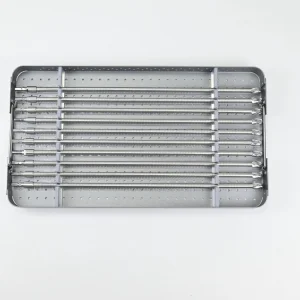
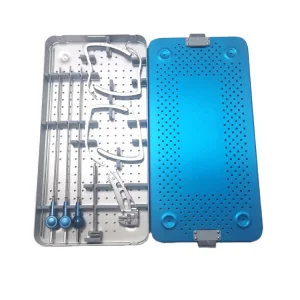
While electrosurgical generators provide controlled energy, they function alongside critical physical instrumentation. In orthopedic joint reconstructions, sports medicine repairs, and spine surgeries, energy devices and mechanical systems work in unison:
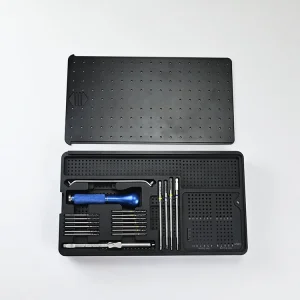
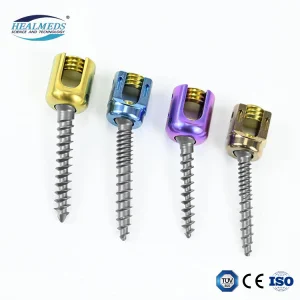
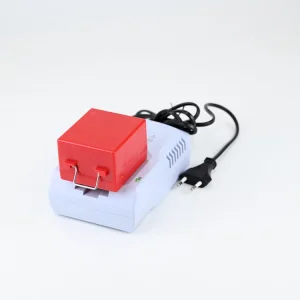
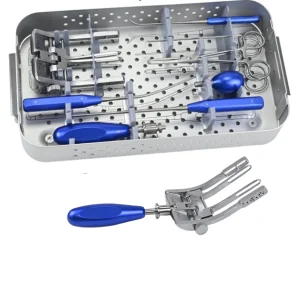
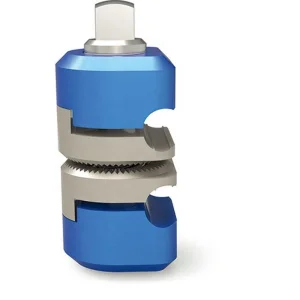
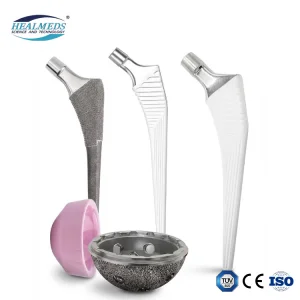
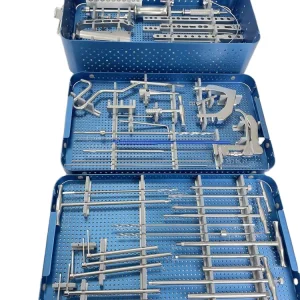
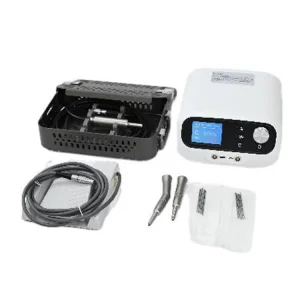
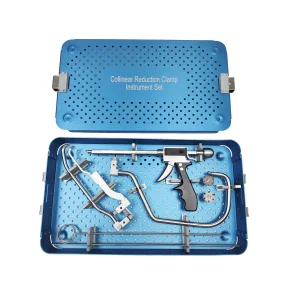
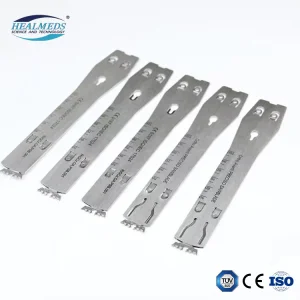
During major operations like total hip or knee replacements (e.g., using Titanium Hip Replacement Implants or Knee Joint Surgery Instrument Sets), electrosurgery is used to control soft tissue dissection and bleeding to maintain a clear visual field. Additionally, orthopedic instruments like Intramedullary Femoral Nails and Flexible Reamers prepare the bone cavity, while compatible high-speed power tools (including Stryker Precision Saw Blades and high-capacity replacement batteries) provide the mechanical power required for precise osteotomies. By ensuring that electrosurgical energy frequencies do not interfere with digital imaging or motorized orthopedic power tools, our systems maintain electrical compatibility inside the operating room.
Integrating artificial intelligence algorithms to evaluate the moisture and protein levels of the targeted tissue. This automatically customizes energy outputs, optimizing coagulation and minimizing surgical smoke output.
Developing low-latency software interfaces that connect directly with robotic surgical consoles. This allows remote surgeon feedback and immediate adjustments to coagulation or ablation energy.
Configuring unified platforms that trigger integrated smoke evacuation pumps the moment the active handpiece is pressed. This captures plume particles and limits operating room exposure to chemical byproducts.
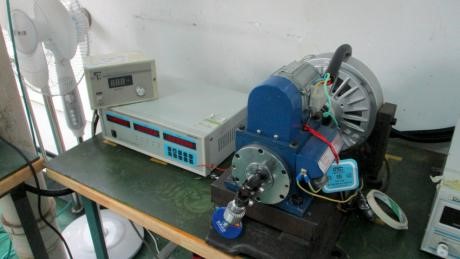
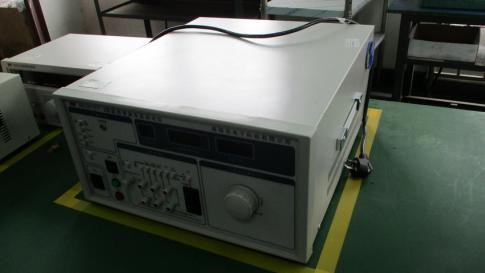
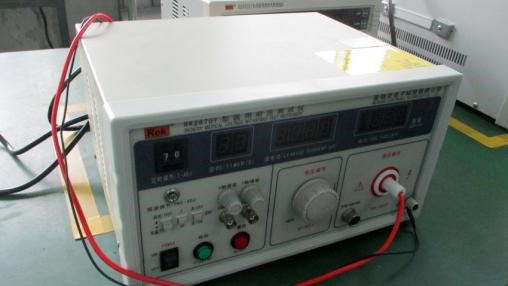
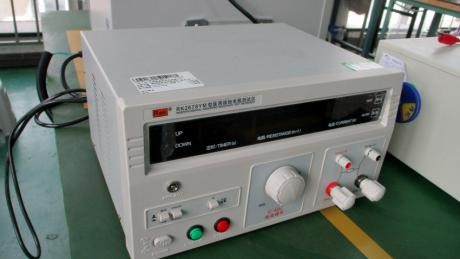
Our quality system is audited to ISO 13485 standards. Every ESU we build undergoes a series of safety tests, including high-frequency leakage testing and dielectric strength verification, keeping our products fully compliant with IEC 60601-1 and IEC 60601-2-2 standards.
Yes. Our R&D team can customize software and hardware architectures. We can configure specialized duty cycles, cut/coagulation blends, and voltage frequencies to optimize compatibility with your custom instruments.
Our units feature Return Electrode Monitoring (REM). The generator continuously checks the impedance of a split return pad. If contact is lost or impedance changes, the generator stops power output to protect the patient.
We provide full-service development, including PCB design, custom firmware engineering, structural molding, graphic design, and custom packaging. This allows you to scale from basic branding to complete product designs.
Our generators use custom-tuned frequencies that prevent interference with orthopedic equipment, including titanium joint implants, intramedullary rods, and motorized surgical handpieces. This ensures safe operations and clean cuts during complex joint reconstructions.