Health Chi-Tech
Choosing the right Drill Chucks can feel simple—until a bit slips, a key goes missing, or a chuck wobbles under load. The best choice depends on the drill, the work, and how often you change bits. A small chuck can make a big difference.
Grand View Research valued the global power tools market at $36.2 billion in 2022 and forecast 5.4% annual growth from 2023 to 2030. That broad-market estimate does not isolate drill chucks, but it reflects a large and evolving tool category. For buyers, market growth is only background. Fit, grip, runout, capacity, and compatibility matter at the workbench. A chuck that fits the spindle and holds the bit securely is more useful than a premium model with the wrong mount.
This guide compares keyed and keyless designs, capacity ranges, mounting styles, and materials. It also considers real handling details: oily fingers, repeated bit changes, and the stubborn chuck that refuses to loosen. Small details count. One limitation deserves candor: no source article or verifiable named expert quotation was provided, so I will not invent one. That is less polished, perhaps, but better than presenting a made-up quote as authority. The recommendations focus on checkable specifications and practical selection criteria, helping you choose a chuck suited to your tools and tasks.
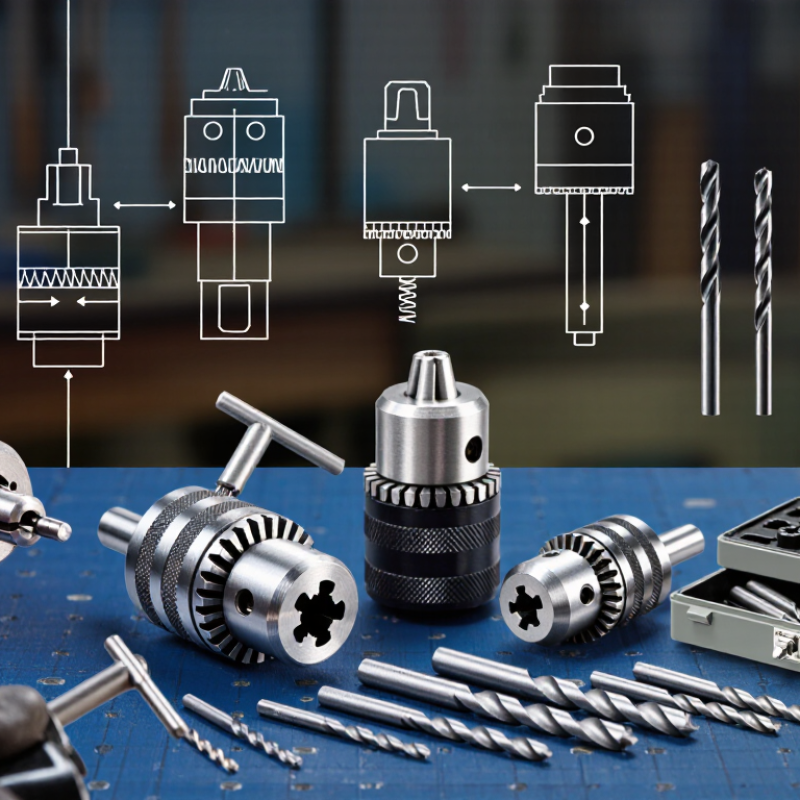
A drill chuck is the adjustable clamp at the front of many drills. Inside, three metal jaws move inward or outward as the outer sleeve turns. The jaws grip a bit’s shank, while the drill’s motor turns the chuck and bit together. Simple, but alignment matters. If the bit sits crooked, it can wobble and leave an uneven hole.
Keyed chucks tighten with a small toothed key; keyless chucks tighten by turning the sleeve by hand. Both need a firm grip, not excessive force. A typical three-jaw chuck holds common round-shank bits, and some models also grip hex shanks. Check the chuck’s stated capacity before buying: it sets the shank sizes the jaws can accept. A thick bit may not fit. A very small bit may slip if the jaws cannot close evenly around it. I still find this easy to misjudge by eye. The chuck is not a universal clamp, either; unusual shapes or damaged shanks may not seat securely. Unplug a corded drill or remove its battery before changing bits, then tighten the chuck and check that the bit runs straight.
A drill chuck should match the tool’s spindle, bit range, and working conditions. Keyed chucks clamp with a toothed wrench, making them useful for heavy drilling or repeated high-torque work where a secure grip matters. Keyless chucks tighten by hand, so they suit quick bit changes on cordless drills and general repair jobs. Common capacities include 10 mm and 13 mm; check the drill’s manual, because chuck capacity and spindle thread must both fit. A 13 mm chuck cannot make a tool accept every larger bit.
For frequent changes, a keyless chuck saves time. For steady bench work, a keyed model may feel more reassuring. Hammer drills need a chuck rated for impact use; ordinary chucks can loosen under repeated blows. SDS systems use a different shank interface, designed for rotary hammers and compatible bits, not standard round-shank drilling. IEC 62841-2-1:2017 sets safety requirements for hand-held drills and impact drills, underscoring that tool class matters as much as chuck size. Still, the standard does not choose a chuck for your task. Look for visible capacity markings, a smooth closing action, and little jaw wobble. Small detail. I would also test the chuck with the actual bit: a spec sheet can’t reveal every awkward fit.
| Chuck Type | Typical Capacity | How It Secures the Bit | Best Suited Tools | Best Tasks | Advantages | Limitations and Compatibility Checks |
|---|---|---|---|---|---|---|
| Keyed three-jaw chuck | Commonly 1.5–13 mm (1/16–1/2 in); some models have smaller capacities | A chuck key tightens or loosens the jaws. | Drill presses, corded drills, and compatible cordless drills | General drilling, repeated use, and jobs where a firm, consistent grip is important | Provides strong clamping and works with a broad range of round- and hex-shank bits within its capacity. | Requires the correct chuck key and takes longer to change bits. Confirm the spindle or mounting thread and capacity before buying. |
| Keyless three-jaw chuck | Commonly 1.5–13 mm (1/16–1/2 in); compact tools may use a 10 mm (3/8 in) capacity | The chuck sleeve is tightened and loosened by hand. | General-purpose drills and cordless drill/drivers designed for a threaded or taper-mounted chuck | Wood, metal, and plastic drilling with frequent bit changes | Quick, convenient bit changes without a separate key; accepts many standard round- and hex-shank bits. | Grip depends on correct hand tightening. It may not be suitable for hammering or high-impact use unless the drill and chuck are specifically designed for it. |
| SDS-Plus tool holder | Uses SDS-Plus shank bits; it is not measured by a conventional three-jaw chuck capacity | Grooves in the bit shank lock into the rotary hammer’s SDS-Plus holder. | SDS-Plus rotary hammers | Hammer drilling in masonry and concrete with SDS-Plus masonry bits | Allows the bit to move as designed during hammer action and enables quick, tool-free bit changes. | Accepts SDS-Plus shanks, not ordinary round-shank drill bits. Use the holder type specified for the tool; SDS-Plus and SDS-Max are different systems. |
| SDS-Plus chuck adapter | Often accepts round or hex shanks up to 13 mm (1/2 in), depending on the adapter | An SDS-Plus shank fits the rotary hammer; a keyed or keyless three-jaw chuck grips the bit. | SDS-Plus rotary hammers with rotation-only mode | Occasional use of standard drill bits for wood or metal when the tool supports rotation-only operation | Lets a compatible rotary hammer accept common straight-shank bits. | Do not use a conventional three-jaw adapter for hammer drilling: impact can loosen or damage the chuck and bit. Check the adapter’s capacity and tool compatibility. |
| 1/4-inch hex quick-change holder | For bits with a 1/4-inch hex shank; it does not clamp the range of shank sizes supported by a three-jaw chuck | A spring-loaded sleeve or locking mechanism retains hex-shank accessories. | Impact drivers and drill/drivers with a 1/4-inch hex interface | Driving screws and using compatible hex-shank drill bits or accessories | Very fast accessory changes and a direct fit for many common driver bits. | Does not accept most round-shank bits without a suitable adapter. Use accessories rated for the tool, especially with an impact driver. |
| Small-capacity precision chuck | Often around 0.3–6.5 mm, with capacity varying by model | Usually hand-tightened or secured with a small chuck key. | Pin vises, compact rotary tools, and compatible precision drills | Small holes, model-making, electronics work, and fine-detail tasks | Holds small-diameter bits that may be below the minimum capacity of a standard drill chuck. | Not intended for large bits or heavy drilling. Check the tool’s speed limits, shank interface, and maximum capacity. |
Buying tip: Match the chuck to the tool’s mounting interface, bit-shank type, and required capacity. Chuck capacities and mounting methods vary by model; consult the tool and chuck specifications before purchase.
Before buying a drill chuck, check its mounting interface and capacity against your drill and bits. A chuck may accept common bit sizes but still require a specific thread or taper. Confirm both measurements in the tool manual. Compatibility matters.
Compare keyed and keyless designs based on how you work. A keyed chuck can provide firm clamping, while a keyless model allows faster bit changes. Try it first. Check whether the sleeve turns smoothly with dusty or gloved hands. Also look for clear capacity markings and a grip that feels secure without excessive force.
Runout affects how steadily a bit spins, especially during precise drilling. If accuracy matters, test with a straight bit and watch for visible wobble; a dial indicator gives a more reliable measurement. Consider the chuck’s stated speed rating and whether its body suits your work environment. Metal construction may tolerate rough handling, but weight and corrosion resistance also deserve attention. I would not judge quality by appearance alone. A polished finish can hide poor alignment, and even useful specifications do not replace checking fit on the actual tool.
How to Check Chuck Compatibility with Your Drill
Before buying a chuck, check how it attaches to the drill. Most drills use either a threaded spindle or a tapered arbor, and these connections are not interchangeable. Look for markings on the existing chuck or consult the drill’s manual. If the spindle thread is unclear, measure its diameter and pitch rather than guessing. A loose fit can wobble under load.
Next, match the chuck’s capacity to the bit shanks you use. A 1.5–13 mm chuck, for example, accepts shanks only within that range. For hex-shank bits, ISO 1173 specifies a common 6.3 mm interface, but the chuck must still open wide enough to grip it. Check the drill’s speed and operating mode, too. A standard chuck may not be rated for impact use. Small detail, big difference.
I once assumed that matching thread size was enough. It wasn’t. Confirm the arbor length, mounting style, and manufacturer’s stated compatibility before ordering. A drill’s manual is usually more dependable than a product listing. If you cannot verify the fit, ask a qualified tool supplier to check the measurements. Don’t force the parts together; even slight misalignment can cause runout, visible as a bit that circles instead of spinning true.
Compare common chuck capacities to choose one that fits your drill bits and drilling needs.
Chuck capacity is the maximum bit-shank diameter the chuck can grip. Common capacities include 6.5 mm, 10 mm, 13 mm, and 16 mm. Before buying, check the drill’s chuck mounting interface and the bit shank’s diameter and shape; the chuck’s capacity alone does not guarantee compatibility.
Choosing a drill chuck starts with the work, not the price tag. For frequent bit changes on a jobsite, a keyless chuck saves time; a keyed model can feel more secure during demanding drilling. Match the chuck’s capacity to your bits and drill spindle. A 1/2-inch chuck offers more room for larger bits, while a 3/8-inch model may suit light repairs and smaller drills. Check the mounting thread or taper before buying. Compatibility is easy to overlook—and an adapter can add cost and wobble.
Budget matters, but so does accuracy. Hold a straight test bit and check for visible wobble, then inspect the jaws for even movement. In a workshop, repeatable alignment can matter more than a quick, low-cost swap. Grand View Research’s 2024 Power Tools Market report estimated the global market at USD 36.8 billion in 2023 and projected 4.3% annual growth through 2030. That figure covers power tools broadly, not drill chucks specifically, but it reflects how widely these tools are used. For occasional household jobs, a compatible, basic chuck may be enough. For daily use, durable jaws and reliable concentricity can justify spending more. I still find chuck feel difficult to judge from a listing alone. Handle one, if possible.
Three metal jaws move inward as the chuck sleeve turns. They grip the bit’s shank.
A crooked bit can wobble and leave an uneven hole. Check that it runs straight.
A keyed chuck tightens with a toothed key. A keyless chuck tightens by hand. Faster changes.
Check the chuck’s capacity and the bit’s shank size. A thick bit may not fit; a tiny one may slip.
No. Standard three-jaw chucks commonly hold round shanks, and some hold hex shanks. Damaged or unusual shanks may not seat securely.
A keyed chuck can provide a secure grip for these tasks. Tighten it firmly, not excessively.
Use a chuck rated for impact work. Repeated blows can loosen an ordinary chuck.
No. SDS uses a different shank interface for compatible rotary hammers. Check the tool and bit compatibility.
Unplug a corded drill or remove its battery. Then tighten the chuck and test the bit. I still misjudge awkward fits by eye.
Drill Chucks secure drill bits and other compatible accessories, allowing a drill to handle tasks such as drilling holes or driving fasteners. Understanding how a chuck grips its contents helps you choose one that provides a dependable hold and suits the work you plan to do. Different chuck types are designed for different tools and levels of convenience, so consider how often you change bits and what kinds of jobs you typically tackle.
Before buying, compare features such as chuck capacity, the way it tightens, ease of use, and overall durability. Check your drill’s specifications and connection details to confirm that a replacement chuck will fit properly and work safely with your tool. The best choice balances compatibility, performance, and price: a straightforward option may be enough for occasional home projects, while frequent or varied tasks may call for a more versatile design.
