Health Chi-Tech Health Chi-Tech

How to Source Orthopedic Accessories for Your Business?

Time:2026-09-25 Author:Ethan
0%

Sourcing Orthopedic Accessories requires more than comparing prices on a supplier website. A knee brace, wrist splint, cervical collar, or walking aid can affect comfort, mobility, and recovery. Your purchasing decisions should reflect real user needs, clinical expectations, and dependable product performance.

Begin by defining each product clearly. Record materials, sizing ranges, adjustment methods, weight limits, packaging details, and intended use. Ask suppliers for technical specifications, inspection records, product samples, and evidence of quality control. A sample should be tested in realistic conditions, such as repeated fastening, daily cleaning, or several hours of wear. Details matter.

Reliable suppliers communicate consistently. They explain production limits, lead times, replacement policies, and customization options without vague promises. Review their manufacturing experience and request references from comparable healthcare businesses. Check whether their documentation matches the actual product. A polished catalog proves little by itself.

Small gaps can become expensive problems. A brace may fit well but irritate skin after extended use. A crutch may look sturdy but feel unstable on uneven flooring. Customer feedback, clinician observations, and return data can reveal issues that factory samples miss. I have learned that a low quotation can hide higher support costs. Price still matters, but it should not lead the decision.

Build a sourcing process that includes supplier screening, sample evaluation, incoming inspection, and ongoing performance reviews. Keep records for each batch and communicate changes before delivery. Orthopedic Accessories should support safe, practical use, not merely fill warehouse space. Trust takes time. Careful sourcing protects customers, strengthens your reputation, and creates a more resilient business.
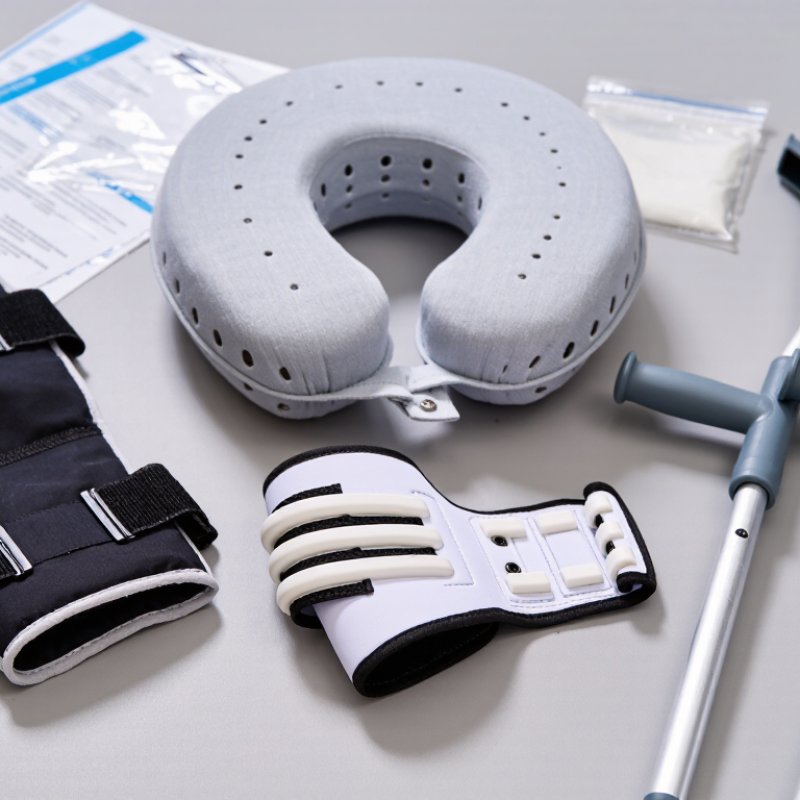
How to Source Orthopedic Accessories for Your Business?

Define Your Business Needs for Orthopedic Accessories

Before contacting suppliers, define who will use the orthopedic accessories and where they will be sold. A clinic may need durable wrist supports in several sizes, while an online shop may prioritize clear sizing charts and compact packaging. Be specific.

List the products your customers request, such as knee sleeves, ankle braces, or posture supports. Note the activities and fit concerns that matter to them. A support that feels bulky under work clothes may not suit an office customer.

Ask staff what buyers return or exchange most often; those details may reveal gaps in your range.

Estimate monthly demand by product, size, and color, but treat early figures as estimates. Even careful forecasts miss seasonal shifts.

Decide which materials, closures, and care instructions fit your customers’ needs, then record these in a purchasing brief. Check whether suppliers can provide consistent sizing, product specifications, and relevant quality documentation.

Request samples when possible. Try the fasteners, inspect the stitching, and check whether labels remain readable after washing. Small details matter.

Set a realistic budget that includes freight, storage, and likely returns, not just unit cost. A neat spreadsheet helps, though customer feedback may still change the plan.

Identify and Screen Potential Suppliers

When sourcing orthopedic accessories, define the products and customers you plan to serve before contacting suppliers. Specify items such as braces, support straps, or compression sleeves, along with sizes, materials, packaging, and expected order volumes. Request product specifications and samples. Ask for proof. Review material descriptions, labeling, and quality-control records, and check that documents match the products being offered. Details matter. If a supplier cannot explain how it handles inconsistent stitching, sizing changes, or damaged packaging, that gap deserves attention.

Screen potential suppliers through practical questions, not polished sales claims alone. Ask about production capacity, typical lead times, minimum order quantities, and how they manage defects or delayed shipments. Check references from comparable business customers where possible. Test samples for fit, finish, seam strength, and clear sizing labels, then record your findings against the same criteria for each supplier. Confirm that requested documentation is suitable for the markets where you intend to sell. A video call can help clarify workshop processes, but it is not a substitute for records or sample checks. No checklist catches everything; I would revisit early assumptions after the first order, especially if quality varies between samples and delivered stock.

How to Source Orthopedic Accessories for Your Business? — Identify and Screen Potential Suppliers

Use these regulatory milestones as a checklist when screening suppliers. Ask for current, verifiable documentation relevant to the markets where you plan to sell.

How to use this chart: These are regulatory milestone years, not supplier scores or certification claims. Verify each supplier’s certificates, product scope, and applicable market requirements directly with the issuer or regulator.

Sources: ISO 13485:2016; EU Regulation 2017/745; FDA Quality Management System Regulation (QMSR).

Verify Product Quality and Regulatory Compliance

For orthopedic accessories, verify the item, not just the supplier’s paperwork. Ask for material specifications, test results, lot traceability, and clear instructions for use. For a knee brace, check that sizing, fastening strength, and skin-contact materials match the product specification. The ISO Survey 2023 recorded roughly 31,600 valid ISO 13485 certificates worldwide. That scale shows how widely medical-device quality systems are used, but a certificate does not prove that a specific accessory meets its claims. Paperwork can look tidy. It can still mislead.

Check requirements for each target market and product type. In the United States, confirm the applicable FDA classification and obligations; registration or listing does not mean FDA approval. For European sales, assess relevant EU Medical Device Regulation requirements and supporting technical documentation. Request current declarations, test reports, and change-control records, then check that product names and model numbers match across documents. A mismatch matters.

Sample products from actual production lots, not only polished samples. Inspect seams, labels, packaging, and any stated cleaning or reuse instructions. Keep records of supplier audits, complaints, and corrective actions. I would not treat one successful inspection as a guarantee; defects can appear after a material or factory change. Ask suppliers to notify you before changes, and review evidence again when specifications shift.

Compare Pricing, Minimum Orders, and Delivery Options

How to Source Orthopedic Accessories for Your Business?

Sourcing orthopedic accessories requires more than comparing the lowest unit price. I once compared supplier quotations too quickly. The cheapest offer excluded packaging, inspection, and import-related charges. Calculate the landed cost for each item, including samples, freight, duties, and quality checks. Request written specifications for materials, sizing, load limits, and product tolerances. Reliable suppliers should provide traceable batch records and relevant testing documents. Confirm that labeling and safety information meet the rules in your target market.

Minimum order quantities can change your cash flow significantly. A lower unit price may require 5,000 pieces, while your realistic demand may be 800. Ask for tiered pricing at several quantities. Negotiate a smaller trial order before making a large commitment. Custom colors, packaging, or sizing usually increase the minimum order. That detail is easy to miss. I have learned that excess inventory can cost more than a slightly higher purchase price.

Delivery options should match urgency and product risk. Air freight is faster, but it can reduce margin on bulky supports or mobility accessories. Ocean freight costs less per unit, yet it needs longer planning and buffer stock. Request production time, dispatch time, estimated transit time, and inspection timing separately. Do not accept one vague delivery estimate. Track how suppliers handle damaged cartons, shortages, and delayed shipments. A written replacement process matters. It may feel excessive, but one unresolved shipment can disrupt customer service for weeks.

How to Source Orthopedic Accessories for Your Business? - Compare Pricing, Minimum Orders, and Delivery Options
Orthopedic Accessory Typical Materials Indicative Wholesale Price
per Unit (USD)
Typical MOQ Standard Production Lead Time Express or Small-Batch Option Common Delivery Options Quality and Compliance Checks
Elastic Knee Support Nylon, polyester, spandex, elastic bands, silicone grip strips $1.20–$4.50 100–500 units 15–30 days Sample orders are commonly available; custom colors may require a higher MOQ. Courier or air freight for samples; sea or air freight for bulk orders. Check size consistency, stitching, stretch recovery, skin-contact materials, labeling, and packaging.
Wrist and Thumb Brace Neoprene, breathable fabric, hook-and-loop fasteners, aluminum or plastic stays $2.00–$7.00 100–300 units 20–35 days Stock designs may be supplied in smaller quantities than customized products. Air freight is suitable for moderate quantities; sea freight is generally more economical for cartons. Verify range of motion, fastening strength, edge finishing, material composition, and size markings.
Ankle Stabilizing Brace Neoprene or knitted fabric, molded plastic supports, straps, foam padding $3.00–$10.00 100–500 units 20–40 days Pre-production samples and size-set samples are usually available before bulk production. Courier for samples; air or sea freight for commercial shipments. Inspect support rigidity, strap adjustment, seam durability, skin comfort, and product dimensions.
Cervical Neck Collar Closed-cell foam, cotton or polyester cover, hook-and-loop closure, plastic reinforcement $1.50–$5.50 100–300 units 15–30 days Standard sizes may be available from inventory; custom covers usually extend lead time. Air freight for urgent replenishment; sea freight for regular bulk shipments. Check foam density, neck support, closure security, washable-cover quality, and user instructions.
Finger Splint Aluminum, foam padding, thermoplastic material, fabric straps $0.40–$2.50 200–1,000 units 15–30 days Small trial quantities may be possible for standard configurations. Courier or air freight for compact shipments; consolidated sea freight for larger orders. Check smooth edges, correct sizing, padding adhesion, corrosion resistance, and individual packaging.
Adjustable Forearm Crutches Aluminum tubing, polypropylene or rubber handgrips, rubber ferrules $12.00–$35.00 50–200 pairs 25–45 days Samples are generally available, but freight costs are higher because of product volume. Sea freight for full cartons; air freight for urgent or smaller commercial orders. Test load capacity, height-adjustment locks, grip strength, ferrule wear, weld quality, and carton protection.
Folding Walking Frame Anodized aluminum, steel hinges, plastic handgrips, rubber feet $15.00–$40.00 50–200 units 25–45 days Stock models may support smaller orders; customized colors and logos normally require a higher MOQ. Sea freight is usually the lowest-cost option; air freight is available for urgent replenishment. Verify static load performance, hinge security, anti-slip feet, folding mechanism, and surface finish.
Reusable Cold Therapy Pack Gel compound, polyethylene film, nylon or fabric cover $1.00–$5.00 100–500 units 15–30 days Standard sizes can often be sampled quickly; custom gel formulas require additional testing. Courier or air freight for small quantities; sea freight for non-urgent bulk orders. Check leak resistance, sealing quality, temperature performance, freeze-thaw durability, and safety labeling.

Note: Prices, MOQs, lead times, and freight methods are typical market ranges for unbranded products and can vary by material specification, order volume, customization, destination, seasonal capacity, and applicable import requirements. Confirm final quotations, shipping terms, product testing, and documentation before placing an order.

Manage Purchasing, Inventory, and Supplier Performance

Sourcing orthopedic accessories requires more than comparing unit prices. Build a purchasing plan around braces, splints, crutches, and post-operative supports by size, material, and clinical use. McKinsey’s 2020 supply-chain survey found that 93% of leaders planned to improve resilience, while 73% intended to adopt multi-sourcing. That lesson applies here. Qualify at least two capable suppliers for critical items, then verify samples, packaging, traceability, and stated lead times. I would not trust a spreadsheet alone. A physical sample often reveals weak stitching, uncomfortable edges, or unclear sizing.

Inventory control should connect demand forecasts with real shelf behavior. Set minimum and maximum levels for each SKU, including size variations that sell unevenly. Review slow-moving stock monthly, especially after seasonal campaigns or hospital contract changes. Track stockouts, expiry risks, order accuracy, and emergency freight costs. Supplier performance also needs measurable standards: on-time delivery, defect rate, response time, documentation accuracy, and corrective-action speed. A quarterly scorecard creates evidence for renewal decisions. However, performance scores can hide small but serious failures, such as repeated defects in one high-risk size.

Tips: Request a pilot shipment before scaling purchases. Keep retained samples and inspection photos. Use lot-level records. Recheck safety stock after three months of real sales. The plan may need correction. That is normal. Continuous review is safer than pretending the first forecast was perfect.

FAQS

What should I define before contacting potential suppliers?

Define the product types, customer needs, sizes, materials, packaging, and expected order volumes. Include braces, support straps, compression sleeves, splints, or crutches. Details matter.

Which documents should I request from a supplier?

Request product specifications, material descriptions, labeling details, quality-control records, and relevant market documents. Check whether the documents match the actual products and samples.

How can I test product samples effectively?

Check fit, finish, seam strength, comfort, packaging, and sizing labels. Record each result using the same criteria. A physical sample may reveal weak stitching or rough edges.

What questions can expose supplier weaknesses?

Ask about production capacity, lead times, minimum order quantities, defects, damaged packaging, and delayed shipments. Ask how inconsistent stitching or sizing changes are handled. Vague answers need review.

Should I rely on a video call or sales presentation?

No. A video call may clarify workshop processes, but records and samples provide stronger evidence. Polished claims are not enough.

How can I reduce supply interruptions for important products?

Qualify at least two capable suppliers for critical items. Compare their samples, packaging, traceability, delivery times, and documentation accuracy. One supplier may appear reliable until demand changes.

How should I manage inventory by product size?

Set minimum and maximum levels for every product and size variation. Review slow-moving stock monthly. Track stockouts, order accuracy, expiry risks, and emergency freight costs.

How should supplier performance be measured?

Use a quarterly scorecard covering delivery timing, defect rates, response speed, documentation accuracy, and corrective-action speed. Keep retained samples, inspection photos, and lot-level records. Keep checking.

When should purchasing plans be adjusted?

Review safety stock after three months of real sales and revisit forecasts after the first order. Compare delivered stock with approved samples. The original plan may be wrong.

Conclusion

Sourcing Orthopedic Accessories effectively begins with a clear understanding of your business needs, including the product types, intended users, quality expectations, target quantities, and required delivery schedule. Once these requirements are defined, identify potential suppliers with relevant manufacturing capabilities and experience. Screen them by reviewing their communication, production capacity, documentation, quality systems, and ability to provide consistent support.

Before placing an order, verify product quality, material specifications, testing records, labeling, and applicable regulatory compliance for your target market. Compare total costs rather than unit prices alone, taking minimum order quantities, shipping fees, lead times, payment terms, and customization requirements into account. After purchasing, maintain accurate inventory records, establish reorder points, and monitor product movement to avoid shortages or excess stock. Regularly evaluate supplier performance based on quality consistency, delivery reliability, responsiveness, and resolution of problems. A structured sourcing process can help your business control costs, reduce supply risks, and build a dependable long-term supply network for Orthopedic Accessories.

Ethan

Ethan

Ethan is a seasoned marketing professional with a deep expertise in our company's innovative product line. With a passion for sharing knowledge and insights, he takes the lead in regularly updating our corporate blog, where he explores industry trends, product features, and effective marketing......