Health Chi-Tech Health Chi-Tech

How to Choose the Right Knee Joint Supplier in 2026?

Time:2026-09-20 Author:Ethan
0%

Choosing the right Knee Joint supplier in 2026 requires more than comparing prices or browsing polished websites. Hospitals, distributors, and medical device companies need evidence that a supplier can deliver consistent quality, reliable support, and documented performance. A serious evaluation should examine material specifications, machining tolerances, sterilization controls, packaging conditions, and product traceability. One missed detail can affect an entire purchasing decision.

Experience matters in practical situations. Can the supplier maintain stable production during demand changes? Can its team explain why one alloy, coating, or design suits a specific clinical application? Request representative samples, inspection reports, quality certificates, and clearly defined lead times. Review how complaints are recorded and resolved. Ask for references from organizations with similar technical and regulatory requirements.

Trust should be built through verification, not confident promises. Suppliers operating under recognized quality systems, such as ISO 13485, may offer stronger process controls, but certification alone is not enough. Independent audits, transparent documentation, and appropriate regulatory evidence still deserve careful review. Clinical feedback can reveal problems that laboratory data misses.

No supplier is flawless. Some information may remain incomplete. That uncertainty should be documented rather than ignored. A responsible selection process compares technical capability, communication, after-sales service, risk management, and total cost over time. The cheapest offer may become expensive when delays, inconsistent batches, or weak support appear. In 2026, the best Knee Joint supplier will be the one that can demonstrate reliability under real operating conditions, not merely describe it.
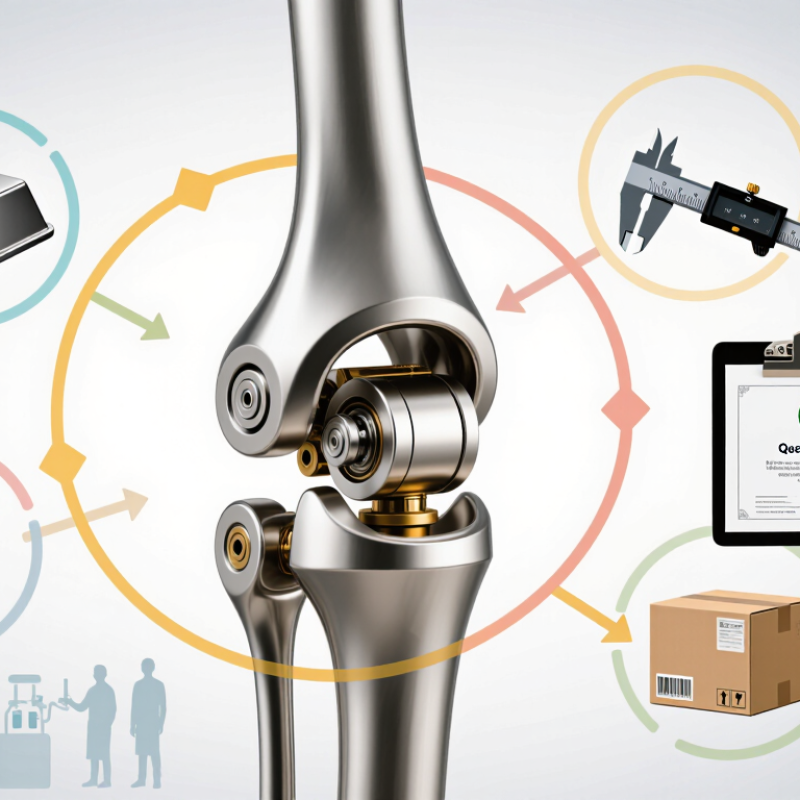
How to Choose the Right Knee Joint Supplier in 2026?

Understanding Knee Joint Supplier Types and Product Categories

Choosing a knee joint supplier starts with identifying the supplier type that matches your clinical and production needs. A manufacturer may offer direct engineering support, stable specifications, and better control over product changes. A specialist supplier can provide deeper knowledge of prosthetic and orthotic applications. A distributor may provide faster local delivery, but product information can be less complete. Ask who controls testing, repairs, and technical updates.

Types matter. Product categories should be reviewed separately, not treated as interchangeable. Standard mechanical knee joints may suit routine applications and predictable daily loads. Adjustable models allow alignment changes during fitting. Locking joints can support users who need extra stability. Heavy-duty options may require stronger materials, wider load ranges, and stricter inspection records. Check dimensions, motion range, weight limits, surface finish, and compatibility with connected components.

Fit comes first. A reliable supplier should provide technical drawings, material details, inspection procedures, and traceable batch information. Request evidence of quality management and relevant product testing. A qualified clinician or engineer should confirm whether the joint suits the user’s mobility level and fitting plan. Price alone is a weak filter. In practical sourcing, a cheaper joint may create extra fitting time, replacement costs, or safety concerns. Even a detailed checklist can miss real-world issues, such as difficult adjustment access or unclear maintenance instructions. Ask for samples when possible, and record feedback from technicians after installation. Supplier claims deserve verification.

Defining Clinical, Technical, and Purchasing Requirements

How to Choose the Right Knee Joint Supplier in 2026?

Defining Clinical, Technical, and Purchasing Requirements

A reliable knee joint supplier should match your clinical pathway, not just present a polished catalogue. Define patient profiles, surgical approaches, expected motion, fixation preferences, and revision risks. Ask for peer-reviewed evidence, post-market surveillance, complaint handling, and documented outcomes. Clinical claims need traceable data. Vague promises deserve scrutiny.

Technical requirements should become measurable specifications. Confirm alloy or polymer grades, surface treatments, tolerances, fatigue testing, sterilization compatibility, packaging integrity, and shelf life. Request certificates, validation reports, sample inspection records, and change-control procedures. Can the supplier maintain consistent dimensions across production batches? That question matters in the operating room. Training matters too. Clear instructions and responsive technical support can reduce avoidable errors.

Purchasing teams need more than a low unit price. Compare lead times, minimum order quantities, forecast flexibility, inventory support, payment terms, and lifecycle costs. Check audit results and business continuity plans. Ask how quickly quality events are reported. Operational experience shows that small delays can disrupt scheduled procedures. Teams often overvalue discounts and underestimate documentation work. That judgment may need revisiting. A supplier can appear efficient until a missing certificate holds a shipment. Build a scorecard with clinical, technical, quality, and purchasing owners. Reassess it annually, because requirements change.

How to Choose the Right Knee Joint Supplier in 2026?

Defining Clinical, Technical, and Purchasing Requirements

This procurement framework prioritizes the evidence required to evaluate a knee joint supplier. Clinical suitability and technical performance receive the highest weighting, followed by quality-system controls, supply capability, and total purchasing cost.

The percentages are a non-brand evaluation model for procurement planning. Requirements should be validated against the intended patient population, applicable regulations, ISO 13485 quality systems, ISO 14971 risk management, ISO 10993 biological evaluation, and relevant implant performance standards.

Evaluating Materials, Design Quality, and Manufacturing Standards

How to Choose the Right Knee Joint Supplier in 2026?

Choosing a knee joint supplier in 2026 requires more than comparing unit prices. Materials should match clinical use, load cycles, and tissue compatibility. Cobalt-chromium alloys provide hardness and wear resistance. Titanium alloys can reduce weight and support fixation. Ultra-high-molecular-weight polyethylene requires verified wear performance. The World Health Organization reports that 1.71 billion people live with musculoskeletal conditions worldwide. That scale makes material evidence essential. Ask for certificates, test methods, and batch-level traceability. “Medical grade” is not enough.

Design quality appears in details engineers can measure. Review contact geometry, motion range, fixation methods, and tolerance control. Request fatigue, wear, corrosion, and sterilization data from independent laboratories. The UK National Joint Registry’s 21st Annual Report records more than three million hip and knee procedures since its creation. Its long-term surveillance shows why revision data matters. A supplier should explain how its design performs beyond laboratory testing. Brochures rarely show the difficult parts.

Manufacturing standards reveal operational maturity. Verify ISO 13485 certification, risk controls under ISO 14971, and biocompatibility testing under ISO 10993. Check cleanroom monitoring, nonconformance handling, and final inspection records. I would also request redacted CAPA examples. They show how problems are actually corrected. No supplier is perfect. A missing document may be harmless, or it may signal weak control. That uncertainty deserves a direct answer.

Comparing Supplier Credentials, Customization, and Support Services

How to Choose the Right Knee Joint Supplier in 2026?

Choosing a knee joint supplier requires more than comparing prices. Examine certifications, manufacturing records, and regulatory registrations relevant to your market. A reliable supplier should provide traceability from raw materials to finished components. Request recent audit summaries, product testing data, and clear quality-control procedures. Clinical evidence matters too. A polished website is not proof.

Customization should match real clinical and production needs. Ask whether the supplier offers multiple sizes, alignment options, surface finishes, and material choices. Confirm their tolerance control with documented measurements, not general promises. Request sample components when possible. Check how they handle design changes, imaging data, and small production runs. I would avoid suppliers who accept every request immediately. That confidence may hide weak engineering review.

Tips: Speak with the technical team before signing. Ask for response times, training plans, installation guidance, and complaint-handling procedures. Verify whether replacement parts remain available after delivery. A strong support process includes written instructions, maintenance records, and a named service contact. Test their communication with one practical question. Slow or vague replies are warning signs. No supplier is perfect. Even experienced teams can miss details, so record decisions and review them with qualified clinicians and engineers.

Verifying Compliance, Pricing, Delivery, and Long-Term Reliability

Choosing a knee joint supplier in 2026 requires more than comparing unit prices. The World Health Organization estimates that 1.71 billion people live with musculoskeletal conditions. Demand is significant, but patient safety remains the controlling issue. Verify ISO 13485 certification, material certificates, sterilization controls, and traceability records. Confirm that technical files match the markets where the device will be supplied. Paperwork is not proof. Review audit findings, corrective actions, complaint handling, and change-notification procedures.

Pricing should include molds, testing, packaging, shipping, inspection, and possible regulatory rework. Grand View Research’s 2024 orthopedic devices analysis valued the global market at roughly USD 48 billion in 2023. This growth can attract inexperienced suppliers and optimistic quotations. Request a transparent cost breakdown. Then compare defect rates, warranty terms, minimum order quantities, and payment conditions. The cheapest offer may become expensive after one failed batch.

Delivery reliability needs measurable evidence. Ask for historical on-time delivery data, production capacity, safety-stock policies, and backup processes for critical materials. A supplier should provide batch records and realistic lead times, not vague assurances. Conduct a remote or on-site quality audit when possible. Speak with technical customers under appropriate confidentiality rules. Also check how quickly the supplier responds to nonconformities. Long-term reliability is rarely visible in a brochure. It appears in consistent documentation, stable processes, and honest communication when plans change. Some evaluation models still overvalue price; that weakness deserves regular review.

How to Choose the Right Knee Joint Supplier in 2026? - Verifying Compliance, Pricing, Delivery, and Long-Term Reliability

A practical, evidence-based supplier evaluation scorecard for knee joint components and assemblies

Evaluation Area Assessment Metric Minimum Acceptable Evidence Recommended Target for 2026 How to Verify Suggested Weight
Regulatory Compliance Quality management system Valid ISO 13485 certificate covering the relevant manufacturing scope Certificate issued by an accredited certification body, with no unresolved major nonconformities Check certificate number, scope, expiry date, certification body, and audit status 15%
Regulatory Compliance Risk management controls Risk-management file aligned with ISO 14971 principles Documented hazard analysis, risk controls, residual-risk review, and change-control records Review sample risk files, control plans, inspection records, and engineering-change procedures 10%
Regulatory Compliance Material and biocompatibility documentation Material certificates, specifications, and applicable biological-evaluation evidence Full traceability for alloys, polymers, coatings, lubricants, and sterilization-contact materials Compare certificates of analysis with approved drawings, bills of materials, and lot records 8%
Product Quality Dimensional and functional conformity Inspection plan covering critical dimensions, range of motion, locking, wear, and load performance Critical characteristics identified with calibrated measurement equipment and documented acceptance limits Review first-article inspection reports, capability studies, test methods, and nonconformance data 12%
Product Quality Lot traceability and corrective action Lot or batch identification linked to raw materials, operators, equipment, inspection, and release records Traceability retrievable within one business day; formal CAPA process with effectiveness checks Conduct a mock traceability exercise and review recent corrective-action closure records 10%
Pricing Total landed cost Item price, tooling, packaging, inspection, freight, duties, validation, and service costs separately itemized Three-year cost model with documented assumptions and no unexplained recurring charges Compare quotations using identical specifications, Incoterms, order quantities, payment terms, and forecast volumes 10%
Pricing Price stability and change control Written quotation validity period and contractual notice for price changes At least 90 days of quote validity and advance notice for material cost changes Review supply agreement, escalation formula, minimum-order quantities, and historical price revisions 5%
Delivery Standard lead time Documented lead time from purchase-order acceptance to shipment Stable, capacity-backed lead time with separate timelines for prototypes, validation lots, and production orders Request twelve months of delivery-performance data and verify capacity plans for critical processes 8%
Delivery On-time delivery performance Measured on-time-in-full performance using an agreed definition At least 95% on-time delivery over the previous twelve months Audit shipment records, promised dates, actual receipt dates, shortages, and late-delivery root causes 8%
Long-Term Reliability Manufacturing continuity Business-continuity plan, backup utilities, alternative equipment, and qualified secondary sources Documented recovery priorities, tested contingency plans, and risk-ranked single-source dependencies Review business-continuity tests, disaster-recovery records, capacity redundancy, and financial-risk controls 7%
Long-Term Reliability Engineering and lifecycle support Named technical contact, drawing control, obsolescence process, and change-notification procedure Advance notification for material, process, site, equipment, and specification changes before implementation Review change-control agreements, response-time commitments, technical staffing, and product-support records 5%
Sustainability and Ethics Environmental and responsible-sourcing controls Evidence of legal environmental compliance, workplace safety, and material-source controls Documented waste, energy, conflict-minerals, labor, and supplier-conduct procedures relevant to the product Review policies, permits, audit findings, material declarations, and corrective-action records 2%
Recommended Decision Rule

Select suppliers scoring at least 80/100, with no critical compliance failure and no unresolved major audit finding.

Commercial Review

Do not compare unit prices alone. Use total landed cost, validation cost, quality cost, inventory exposure, and expected failure cost.

Automatic Disqualifiers

Expired certification, unverifiable test data, missing lot traceability, repeated critical defects, or refusal to support audits.

Note: Targets are procurement screening benchmarks rather than guarantees. Final acceptance criteria should be aligned with the applicable device classification, intended use, market requirements, approved drawings, and quality agreement.

FAQS

Why should price not be the main factor when choosing a knee joint supplier?

Price alone cannot show material quality, fatigue resistance, or manufacturing control. Compare testing, traceability, support, and revision data. Cheap may become expensive.

Which material evidence should a supplier provide?

Ask for material certificates, test methods, and batch-level traceability. Hard alloys may resist wear, while titanium alloys can reduce weight. Polymer components need verified wear data.

What design details deserve close evaluation?

Review contact geometry, motion range, fixation methods, and tolerance control. Request fatigue, wear, corrosion, and sterilization results. Brochures often omit difficult details.

Why is long-term revision information important?

Laboratory results cannot explain every clinical outcome. Revision records show how designs perform over time. The evidence may be incomplete, so review it carefully.

Which manufacturing records should a supplier share?

Request quality certification, risk-control documents, biocompatibility results, and final inspection records. Check cleanroom monitoring and nonconformance procedures. Ask for redacted corrective-action examples.

How can customization claims be tested?

Ask about sizes, alignment options, surface finishes, and material choices. Require measured tolerance data. Sample components can reveal details that promises hide.

What support services should be confirmed before delivery?

Confirm training, installation guidance, response times, complaint handling, and replacement-part availability. Written instructions and maintenance records are useful. A named contact helps.

Are missing documents always a serious warning sign?

Not always. A missing file may be harmless, but it can signal weak control. Ask for a direct explanation and record the decision. Then review it with qualified professionals.

Conclusion

Choosing the right Knee Joint supplier in 2026 requires a structured evaluation rather than focusing only on price. Start by understanding the supplier’s product categories, manufacturing capabilities, and ability to serve different clinical applications. Define your requirements clearly, including joint function, patient needs, technical specifications, expected service life, and purchasing volume. Materials, design precision, production consistency, quality control, and applicable manufacturing standards should then be reviewed to assess overall product reliability and safety.

A qualified supplier should also demonstrate professional credentials, transparent documentation, customization capabilities, and responsive technical support. Before making a decision, verify compliance with relevant market requirements, pricing structure, lead times, warranty terms, and after-sales services. It is equally important to evaluate communication quality, supply stability, and the supplier’s ability to maintain consistent performance over long-term cooperation. By comparing these factors systematically, buyers can select a dependable partner that delivers suitable Knee Joint products, predictable quality, and sustainable business value.

Ethan

Ethan

Ethan is a seasoned marketing professional with a deep expertise in our company's innovative product line. With a passion for sharing knowledge and insights, he takes the lead in regularly updating our corporate blog, where he explores industry trends, product features, and effective marketing......