Health Chi-Tech
Battery Powered Tools are changing how buyers evaluate global sourcing opportunities. Their cordless design supports construction crews, maintenance teams, and workshops where outlets are limited. A worker can move from a rooftop inspection to a narrow service corridor without dragging a power cable. That simple change can improve productivity. It can also expose weaknesses in battery quality, supplier consistency, and after-sales support.
Experienced sourcing teams examine more than the tool’s advertised voltage. They review motor performance, battery cycle tests, charger safety, noise levels, spare-part access, and packaging quality. A reliable supplier should provide clear test reports, traceable production records, and samples that match mass-production units. Factory audits can reveal practical details, such as loose terminals, uneven torque settings, or poorly protected battery contacts. Small defects matter.
Global purchasing also requires careful attention to shipping and compliance requirements. Lithium battery transport may involve specific documentation, packaging standards, and carrier restrictions. Buyers should verify applicable market requirements before placing large orders. They should also confirm warranty terms, replacement procedures, and technical support across time zones. A low unit price may become expensive when defective batteries wait weeks for replacement.
The decision is not always obvious. Battery Powered Tools may cost more initially, especially with chargers and spare packs. Yet dependable systems can reduce downtime and improve workplace flexibility. Product claims still need independent checking. That is where disciplined supplier evaluation matters. With realistic testing, transparent communication, and room for honest improvement, global sourcing can produce safer, more durable, and commercially practical results.
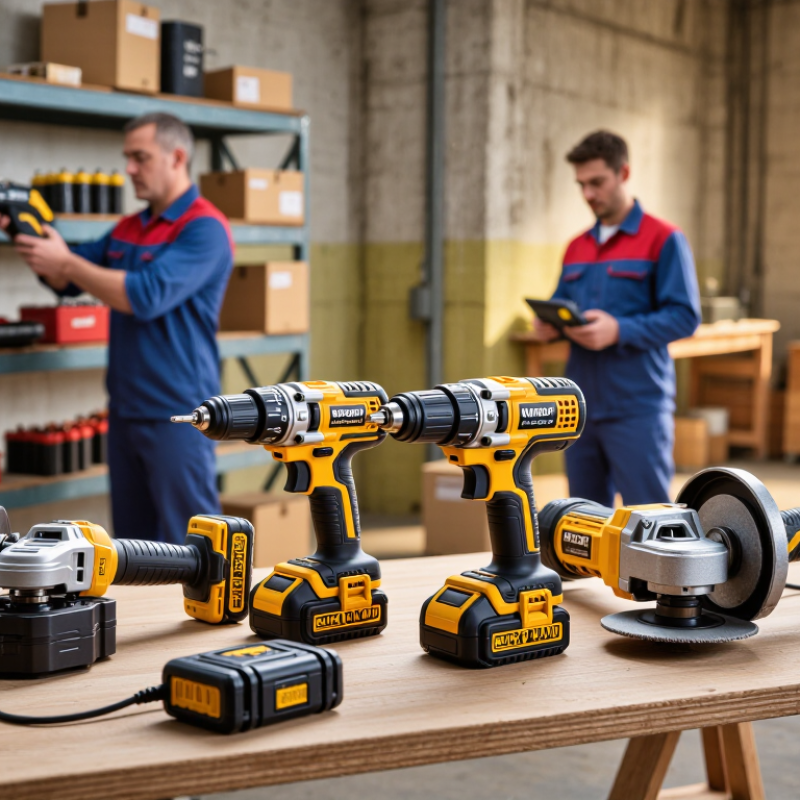
Battery-powered tools are electrically driven devices that use stored energy instead of a wall outlet or fuel engine. A typical unit contains a rechargeable battery pack, motor, trigger, controller, and safety protection. The battery sends direct current to the motor. The motor then drives a blade, bit, wheel, or pump. Many current tools use lithium-ion cells because they are lighter and recharge efficiently. “Cordless” is not maintenance-free.
Grand View Research estimated the global power tools market at about USD 32.7 billion in 2023. Its report projects a compound annual growth rate of roughly 5.3% from 2024 to 2030. IMARC Group also identifies cordless equipment as a strong growth area, supported by construction, maintenance, and home improvement demand. These figures matter to global sourcing teams. They suggest wider supplier capacity, but also more competition for reliable battery systems.
In practical sourcing inspections, runtime claims deserve careful checking. A drill rated for several hours may perform far less under heavy resistance. Test torque, charging time, battery temperature, and repeated-cycle durability. Confirm cell configuration and protection features. Ask whether batteries and chargers remain available separately. A tool can look efficient on a sample table, yet disappoint on a busy worksite. That gap is easy to underestimate.
Battery-powered tools can simplify sourcing across factories, workshops, and remote inspection sites. Without a fixed power cord, buyers can test tools beside packed cartons, assembly lines, or outdoor equipment. That mobility matters.
A sourcing team can compare torque, runtime, charging time, noise, and heat during sample evaluation. Record each result under the same workload.
Suppliers should provide battery capacity, charger specifications, safety documents, warranty terms, and replacement plans. Chargers still require regional compatibility. Batteries also need careful packing and transport documentation.
These details prevent avoidable delays. A modular battery system may reduce accessory purchases, but it is not automatically cheaper. Battery life changes with temperature, load, and storage habits. A tool that performs well for ten minutes may disappoint during a full shift.
Ask for repeated tests, not one impressive demonstration. Inspect serial records and production samples before placing larger orders. Small differences in handle balance can affect worker fatigue too.
I would also question vague runtime claims. They sound convenient, but they are rarely enough for a reliable buying decision. Global sourcing works better when performance data, compliance evidence, and after-sales support travel with every quotation.
Why Choose Battery Powered Tools for Global Sourcing?
International buyers often choose battery powered tools for easier shipping, flexible use, and simpler job-site planning. No fuel tank or power cable is required. A compact tool can move from a warehouse shelf to a construction site quickly. This matters when local electricity standards differ. Battery systems also reduce routine maintenance linked to engines, such as oil changes and fuel storage.
Cost trends are becoming more favorable. BloombergNEF’s Battery Price Survey 2024 reported an average lithium-ion pack price of 115 USD per kWh, a 20% decrease from 2023. Lower battery costs can improve purchasing flexibility, although they do not guarantee lower total ownership costs. Buyers still need to check charger compatibility, replacement battery availability, warranty terms, and transport requirements. The International Energy Agency also highlights rising battery demand and supply-chain pressure in its Global Critical Minerals Outlook 2024. Availability may change unexpectedly. That is the uncomfortable part.
Tips: Request cell test records, cycle-life data, and sample units before signing a large order. Compare tool, battery, and charger costs together. Ask suppliers how they manage damaged or end-of-life batteries. Verify applicable safety documentation for each destination market. A real warehouse trial is useful; product photos are not enough. Pay attention to grip comfort, charging time, and performance after repeated use. Small details often expose weak sourcing decisions.
| Evaluation Dimension | Battery-Powered Tools | Benefit for International Buyers | Data Basis / Practical Note |
|---|---|---|---|
| Point-of-use emissions | Zero direct exhaust emissions | Suitable for indoor work, enclosed facilities, warehouses, and areas with strict air-quality requirements. | Battery tools do not burn fuel during operation; electricity-generation emissions may occur upstream. |
| Typical operating noise | Often lower than comparable gasoline-powered equipment; actual levels vary by tool and load. | Can improve worker comfort and help meet site-specific noise restrictions. | Noise must be verified from the supplier’s measured dB(A) specification because tool categories differ substantially. |
| Operating mobility | No power cable or fuel hose during use | Simplifies work in remote locations, construction areas, logistics yards, and facilities without convenient mains power. | Mobility depends on battery capacity, spare-battery availability, and total tool weight. |
| Routine maintenance | Generally fewer engine-related service items | May reduce oil, spark-plug, air-filter, and fuel-system maintenance compared with combustion-powered equipment. | Brushless motors still require inspection of wear parts, cooling paths, battery contacts, and chargers. |
| Energy storage and runtime | Runtime is determined by watt-hours, tool load, temperature, and battery age. | Buyers can plan operations using charged spare batteries instead of transporting liquid fuel to every worksite. | Runtime should be requested as a measured value under a defined workload; no single runtime applies to all tools. |
| Charging infrastructure | Requires compatible chargers and access to electricity. | A standardized charging area can support multiple tools when the battery platform is managed consistently. | Confirm input voltage, plug type, charging time, regional electrical approvals, and spare-charger availability. |
| International transport compliance | Lithium-ion batteries are regulated dangerous goods in many transport modes. | Early documentation planning helps prevent customs, airline, and freight-forwarder delays. | Standalone lithium-ion batteries are generally shipped under UN 3480; batteries packed with or contained in equipment generally use UN 3481. Requirements vary by mode and battery configuration. |
| Battery documentation | Requires battery specifications and transport test evidence. | Complete documentation supports smoother supplier qualification and international shipment preparation. | Request UN 38.3 test-summary availability, rated watt-hours, safety data where applicable, and accurate packing information. |
| Workplace safety | Eliminates fuel storage and fuel-spill risks during operation. | May simplify site procedures, particularly in indoor or fuel-restricted environments. | Lithium-ion batteries still require protection from short circuits, crushing, overheating, water ingress, and improper charging. |
| Total cost of ownership | Purchase cost includes tools, batteries, chargers, spare batteries, and eventual replacements. | A lifecycle comparison can reveal savings from lower fuel use and reduced engine maintenance. | Compare purchase price, energy cost, consumables, maintenance, battery replacement, warranty, and expected duty cycle. |
| End-of-life management | Battery recycling or regulated disposal is required in many markets. | Supports responsible sourcing when suppliers provide take-back or recycling information. | Do not place lithium-ion batteries in general waste; disposal rules depend on the destination country and local regulations. |
Note: Performance, runtime, noise, cost, certifications, and transport requirements vary by tool type, battery chemistry, configuration, destination market, and operating conditions. Buyers should validate supplier-specific specifications before placing an order.
Technical and supply chain factors require equal attention. Battery-powered tools offer quieter operation, fewer emissions at the point of use, and easier movement across workshops. However, sourcing decisions should begin with cell chemistry, not appearance.
The International Energy Agency reported that global battery cell manufacturing capacity exceeded demand several times in 2023. This creates negotiating power, but capacity alone does not guarantee stable quality. I would not trust a low quotation without reviewing cell traceability, charger compatibility, and replacement availability.
Safety testing needs clear evidence. Ask for records aligned with IEC 62133-2 and UN 38.3 transport testing. Confirm protection against overcharge, overheating, short circuits, and deep discharge.
The IEA’s Global Critical Minerals Outlook 2024 notes that one country controls over 90% of graphite processing and more than 70% of cobalt refining. This concentration can affect pricing and delivery schedules. It may also expose buyers to unexpected disruption. A second supplier is useful, though maintaining two fully qualified sources can increase cost.
Tips:
Request sample units from different production batches. Measure runtime, charging temperature, torque consistency, and idle battery drain. Check whether firmware updates require special equipment. Use landed-cost models that include batteries, chargers, freight, testing, warranty returns, and recycling arrangements. A spreadsheet can still miss field failures. Test tools with real operators before committing to volume.
Battery-powered tools can simplify global sourcing when suppliers understand both performance and supply-chain realities. However, selecting a reliable supplier requires more than comparing prices or reviewing attractive product photos. Experience shows that small specification gaps can create costly problems later.
Ask for evidence. Request battery voltage, capacity, charging time, motor performance, operating temperature, and expected cycle life. Confirm whether these figures come from controlled testing or simple estimates. A dependable supplier should provide recent inspection reports, material details, and clear production records. Video audits can help, but an on-site inspection gives stronger evidence of equipment, worker training, and process control.
Test before scaling. Order samples from different production batches and use them under realistic conditions. Check grip comfort, vibration, charging stability, noise, and performance after repeated use. Review packaging strength, labeling accuracy, spare-part access, and response times for technical questions. A supplier may pass laboratory tests yet struggle with consistent production. I have seen polished samples hide uneven assembly, so batch testing matters. Ask about quality checkpoints, corrective actions, and traceability from incoming materials to final shipment. Clear payment terms and realistic lead times also reveal operational maturity. Do not accept vague promises. Demand measurable answers.
They use stored electrical energy instead of a wall outlet or fuel engine. A typical tool includes a battery, motor, trigger, controller, and safety protection.
Workers can test them beside cartons, assembly lines, or outdoor equipment. No fixed power cord is needed. This makes sample comparisons easier across different work areas.
Measure runtime, torque, charging time, heat, noise, and repeated-cycle durability. Use the same workload for every sample. A short demonstration proves very little.
Not completely. Heavy resistance, cold temperatures, and poor storage can reduce runtime. A tool may last ten minutes during testing, then fail during a full shift. I would request repeated tests.
Request battery capacity, cell configuration, charger specifications, and protection features. Also confirm replacement availability and expected battery life. Ask for production records.
Request testing records for overcharge, overheating, short circuits, and deep discharge protection. Transport documentation should also be complete. Missing paperwork is a warning sign.
No. Shared batteries may reduce accessory purchases, but total costs can still rise. Include chargers, freight, testing, warranty returns, and recycling arrangements. The spreadsheet may miss field failures.
Compare samples from different production batches. Check cell traceability, charger compatibility, delivery schedules, and replacement plans. A second qualified supplier can help, although it may increase costs. Two suppliers are not automatically safer.
Battery Powered Tools are portable, efficient devices that use rechargeable batteries instead of direct electrical connections or fuel. They support global sourcing by offering flexible operation across different work environments, reducing dependence on fixed power supplies, and simplifying transportation and product distribution. For international buyers, their key advantages include mobility, lower operating noise, easier maintenance, and suitability for construction, assembly, repair, gardening, and other professional applications.
When evaluating these products, buyers should consider battery capacity, charging time, voltage compatibility, motor performance, durability, safety features, spare-part availability, packaging, certifications, and shipping requirements. Reliable suppliers should provide consistent product quality, clear technical documentation, stable production capacity, transparent communication, and responsive after-sales support. Buyers should also assess quality-control procedures, sample performance, lead times, customization options, and the supplier’s ability to manage international orders. A careful comparison of technical specifications and supply-chain capabilities can help companies choose dependable Battery Powered Tools that meet operational needs and support long-term sourcing efficiency.
